January 9, 2026
As part of our current cultural perception of ageing, I see a pattern of people’s world getting smaller. I saw it with my parents. When they were in their 30’s, 40’s and 50’s, they traveled alone and together, went to museums, moved every few years, drove hours to visit someone or go to a casino. They had some health concerns and surgeries, but they would recover and pick their patterns back up. In their late 60’s, there were some more serious health issues, and after dealing with that, they became people who mostly stayed home.
I understand that it takes more effort as you get older to do things you used to do with ease. I’m experiencing that myself at 58. I look back with amazement at the pace I kept in my 30’s and 40’s. Rather than disparaging the march of time, however, we can find ways to adapt our pace and accept our new levels of energy without completely giving it up.
A few years ago, John and I read “Die with Zero: Getting all you can from your money and your life.” We had many paradigm shifts due to reading that book (I highly recommend it), and one was the awareness of patterns of energy with age. Research shows there are three phases of late adulthood (a.k.a. the third quarter of life). Starting with the “go-go” years, when you have more money than you had when you were younger, and you also have the ability to travel and get around to things locally. Next comes the “slow-go” years, when you may be slowing down a bit, but you still travel and get out and about. And finally, we may end up in the “no-go” years, when you stay in one place and do not want to do much. I saw that same trajectory in my parents, so my direct experience reflects that story.
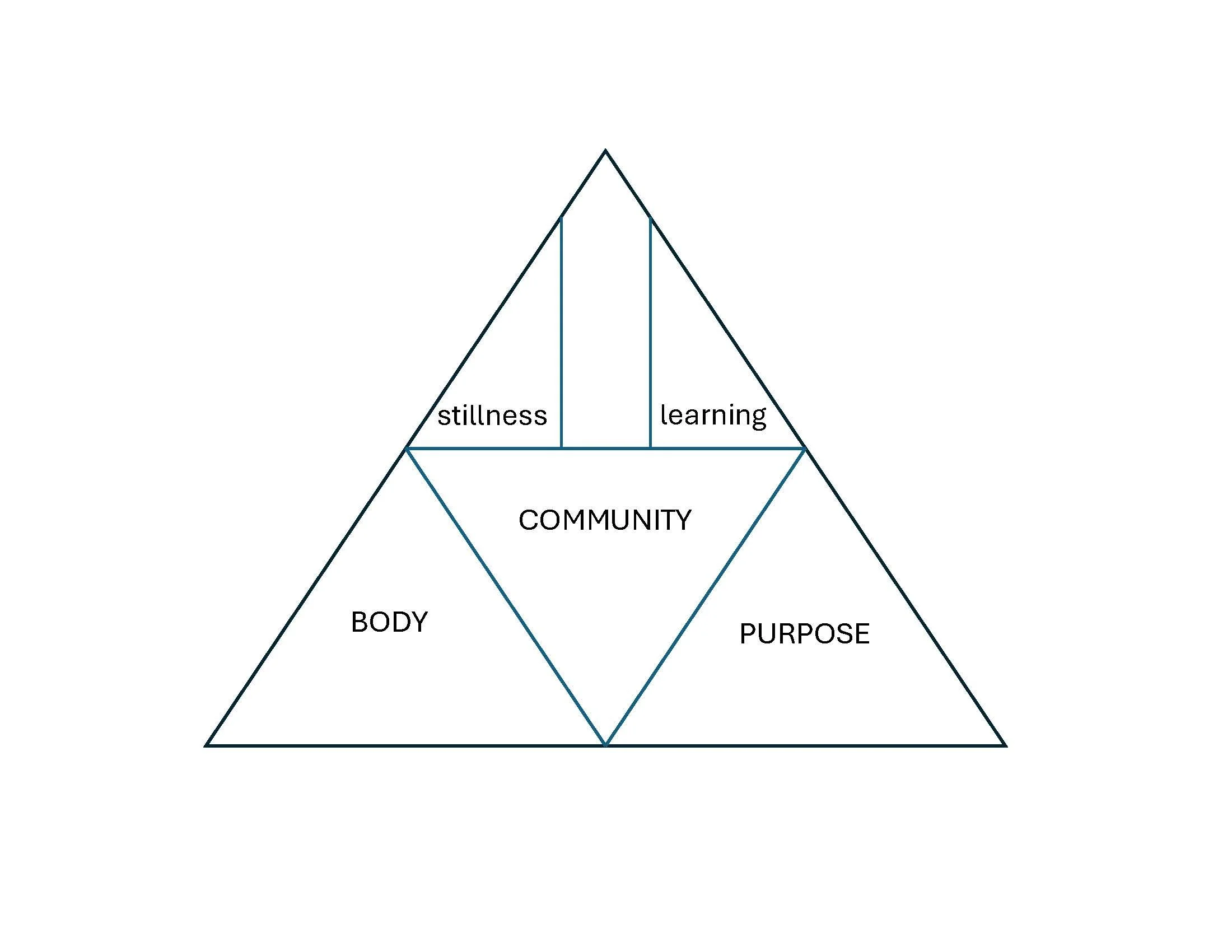
Travel is one way to learn and to experience the world. But I think we act like this about learning too – we let our learning peter out as we get older. I hear all the time: “why would I learn something new at my age!” or “I’m too old to be a beginner.” I think we also might get embarrassed when we are not able to master something, or if we need to ask for help. Things may seem overwhelming or intimidating. But I want to encourage you to keep trying, keep seeking new knowledge, new experiences, as part of your elder-in-training path.
Learning helps us in so many ways. I have a friend in her 80’s who insists on learning how to update her phone and how to use all the features. There are people who read voraciously, keeping up with all the things changing in the world. There are many free on-line courses (I especially like www.coursera.org), and many local learning opportunities at libraries and community centers. Learning, having new experiences, following your curiosity will help you stay abreast of what the younger generations are facing, and will help you have fun! I heard on a podcast, the speaker said his go-to question when he meets someone new is – what are you a beginner at in your life right now? Asking ourselves this question may encourage us to follow our curiosity, keep an open mind and keep learning.